No phrases to display

Summer School on Internet Governance and International Law (SSIGIL) 2026

ssigil

About SSIGIL

Welcome to the Summer School on Internet Governance and International Law (SSIGIL) 2026.

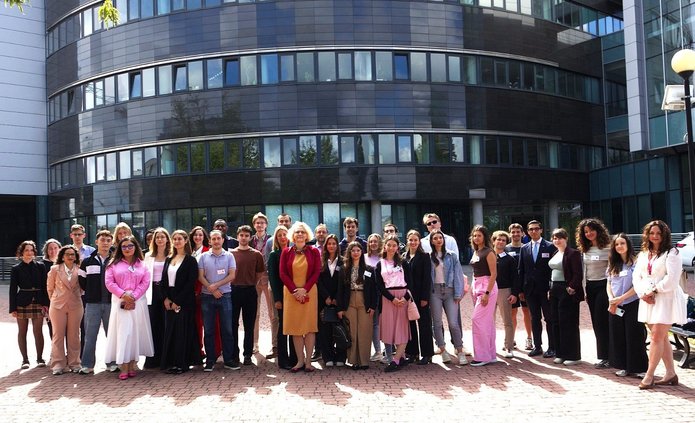
The upcoming edition of SSIGIL will take place 20–25 July 2026 in Łódź, Poland, hosted by the Faculty of Law and Administration at the University of Łódź. The Summer School brings together students, researchers, and practitioners interested in the evolving relationship between international law, cybersecurity governance, and digital infrastructure resilience.

Building on the success of previous editions, SSIGIL provides an interdisciplinary academic platform for analysing the legal and policy frameworks shaping the global digital environment. Particular attention is devoted to the governance of cyberspace, protection of critical digital infrastructure, and the role of emerging technologies in international security and global connectivity.

Throughout the programme, participants engage in interactive lectures, policy workshops, case studies, and simulation exercises, led by an international group of academic experts and policy practitioners.

Key thematic areas include:

  • Application of international law in cyberspace
  • Norms and principles governing state behaviour in the digital domain
  • Internet governance and the multistakeholder model
  • Cybercrime and international legal cooperation
  • Protection of critical digital infrastructure
  • Artificial intelligence and autonomous systems in security contexts
  • Digital sovereignty and jurisdiction
  • Cyber resilience and cybersecurity governance
  • Connectivity and global digital development

The Summer School is designed to promote critical reflection, interdisciplinary collaboration, and practical policy engagement on some of the most pressing challenges facing the global digital ecosystem.

Online Component

June–July 2026

Participants will complete a series of interactive online modules introducing key concepts in cybersecurity governance and international law.

Activities will include:

  • introductory lectures on cyber governance and digital regulation
  • guided readings and asynchronous learning materials
  • interactive workshops with partner universities
  • group preparation for the final simulation exercise

The online component ensures that all participants share a common conceptual foundation before the in-person sessions begin.

Physical Mobility Component

20–25 July 2026 – Łódź, Poland

The on-site component will take place at the Faculty of Law and Administration of the University of Łódź.

Participants will engage in:

  • expert lectures delivered by partner institutions
  • interactive seminars and policy discussions
  • case-study based workshops
  • collaborative group exercises
  • a cybersecurity governance simulation exercise

Evening networking sessions will complement the academic programme, creating opportunities for informal exchange and professional networking.

Day 1 – Introduction and International Law in Cyberspace
  • Welcome session and programme overview
  • Keynote lecture: Application of international law in cyberspace
  • Interactive simulation using the Cybersecurity Architecture Game (Cyber Policy Haus)
Day 2 – International Law, UN Processes and Internet Governance
  • Lecture: Application of international law to cyber operations
  • Seminar on UN processes on responsible state behaviour in cyberspace
  • Workshop on Internet governance and the multistakeholder model
Day 3 – Cybercrime and International Cooperation
  • Lecture on international legal frameworks addressing cybercrime
  • Seminar on jurisdiction and cross-border investigations
  • Case study on international cooperation under global cybercrime treaties
Day 4 – Critical Infrastructure Protection and Emerging Technologies
  • Lecture on protection of critical infrastructure in the digital age
  • Seminar on cyber resilience and essential services protection
  • Policy discussion on artificial intelligence and autonomous systems in international security
Day 5 – Closing Session
  • Programme reflections
  • Certificate ceremony
  • Closing remarks and farewell session

ECTS Credits

Participants who successfully complete the programme will receive 3–5 ECTS credits (subject to confirmation with partner institutions).

Credits will be awarded based on:

  • participation in the online preparatory component
  • active engagement during the on-site programme
  • completion of group assignments and the final simulation exercise

Assessment Methods

Participants will be evaluated through a combination of:

  • Participation (30%)

    Active engagement in online modules and in-person discussions.

  • Group Policy Exercise (40%)

    Participants will develop policy recommendations addressing a cybersecurity or digital governance challenge.

  • Simulation Exercise (30%)

    Participants will take part in a structured international cyber crisis scenario involving policy coordination and decision-making.

Venue

The Summer School will be hosted at the University of Łódź, Faculty of Law and Administration, located at ul. Kopcińskiego 8/12, Łódź, Poland.

Łódź is easily accessible by train from Warsaw, with direct connections from Warsaw Chopin Airport to Łódź Fabryczna railway station. The journey typically takes approximately two hours.

Public transportation, taxis, and ride-sharing services provide convenient travel within the city.

Participation and Fees

SSIGIL 2026 will be organised as part of an Erasmus Blended Intensive Programme (BIP) implemented in cooperation with partner universities.

Participation will therefore primarily be available to students from participating Erasmus partner institutions.

A limited number of fellowships may be available for external participants, subject to funding availability.

Limited Availability

To preserve the highly interactive format of the programme, participation will be limited to a small cohort of approximately 20 participants. Selection will be based on the merit and relevance of applications, ensuring a diverse and interdisciplinary group of fellows.

Contribution to the United Nations Sustainable Development Goals (SDGs)

The Summer School on Internet Governance and International Law contributes to the implementation of several United Nations Sustainable Development Goals by promoting dialogue on resilient digital infrastructures, inclusive connectivity, and responsible governance of emerging technologies.

Through its focus on connectivity and digital infrastructure resilience, the programme supports SDG 9 (Industry, Innovation and Infrastructure) by exploring governance frameworks for secure and reliable digital systems. Discussions on disaster resilience, emergency communications, and infrastructure security also contribute to SDG 13 (Climate Action) by addressing the role of connectivity in climate adaptation and crisis response.

The programme promotes SDG 16 (Peace, Justice and Strong Institutions) through engagement with international legal norms, responsible state behaviour in cyberspace, and governance mechanisms that strengthen stability and security in the digital domain.

By providing accessible, high-level academic training and interdisciplinary capacity building, SSIGIL advances SDG 4 (Quality Education) and contributes to SDG 10 (Reduced Inequalities) through discussions on bridging the global digital divide.

Finally, the Summer School reflects the objectives of SDG 17 (Partnerships for the Goals) by bringing together universities, international organisations, and policy experts in a collaborative educational environment dedicated to strengthening global cooperation on digital governance.

Faculty of Law and Administration
Kopcinskiego 8/12, room 3.61
90-232 Lodz, Poland

lch@wpia.uni.lodz.pl 
+48 42 635 63 78

Funduszepleu
Projekt Multiportalu UŁ współfinansowany z funduszy Unii Europejskiej w ramach konkursu NCBR